

Where story becomes a doorway
Have you ever read a line and felt it knew something about you? Or stood in front of a painting and couldn't quite explain why it stopped you and made you look again?
That's where StoryHeal begins.
We gather in small groups around a poem, a painting, or a short passage and read it slowly together. We notice what draws us in, what surprises us, what lingers. There's time for reflection, conversation and quiet writing.
No background needed. No preparation. Just a willingness to pay attention to something and see what it opens up in you.
What Is StoryHeal?
StoryHeal is a guided literary experience that brings people together around poems, paintings, and short passages of writing. We read slowly and closely, notice what draws us in, and follow the conversation wherever it leads.
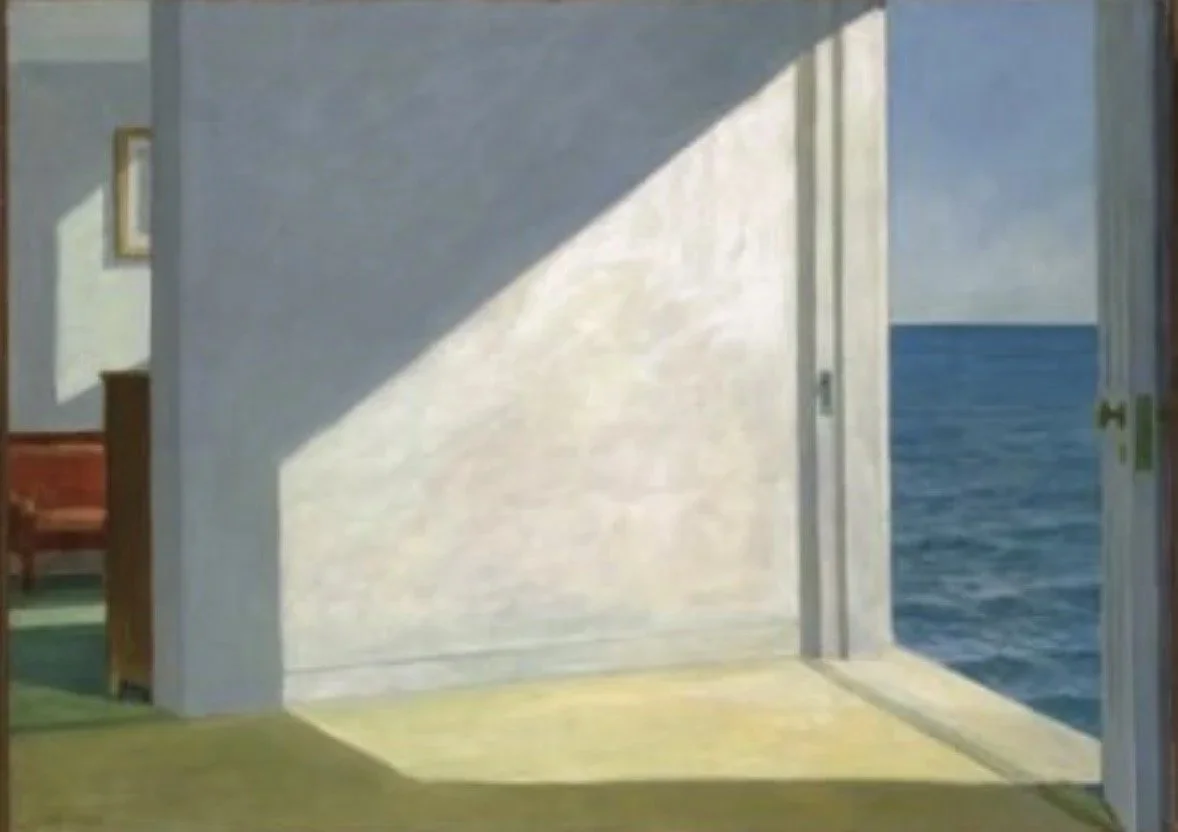
In a recent session, we gathered around the artist Edward Hopper's Rooms by the Sea. We sat with the painting quietly at first. The pouring of light through an open door, the ocean impossibly close, no land between. Just the light, empty room, water waiting.
People began to notice things they hadn't expected to notice. The absence of people. The stillness. The sense of something just departed, or just about to arrive. One person said it felt like standing at the edge of a decision. Another said it felt like grief. Another said it felt like hope. All three were right.
Then we read Mary Oliver's "Wild Geese" together. And something happened in the room that's hard to describe but easy to recognize. The particular quiet that falls when people feel permission to be exactly where they are. To stop performing. To just be present with something beautiful and let it ask something of them.
That’s what StoryHeal is all about.
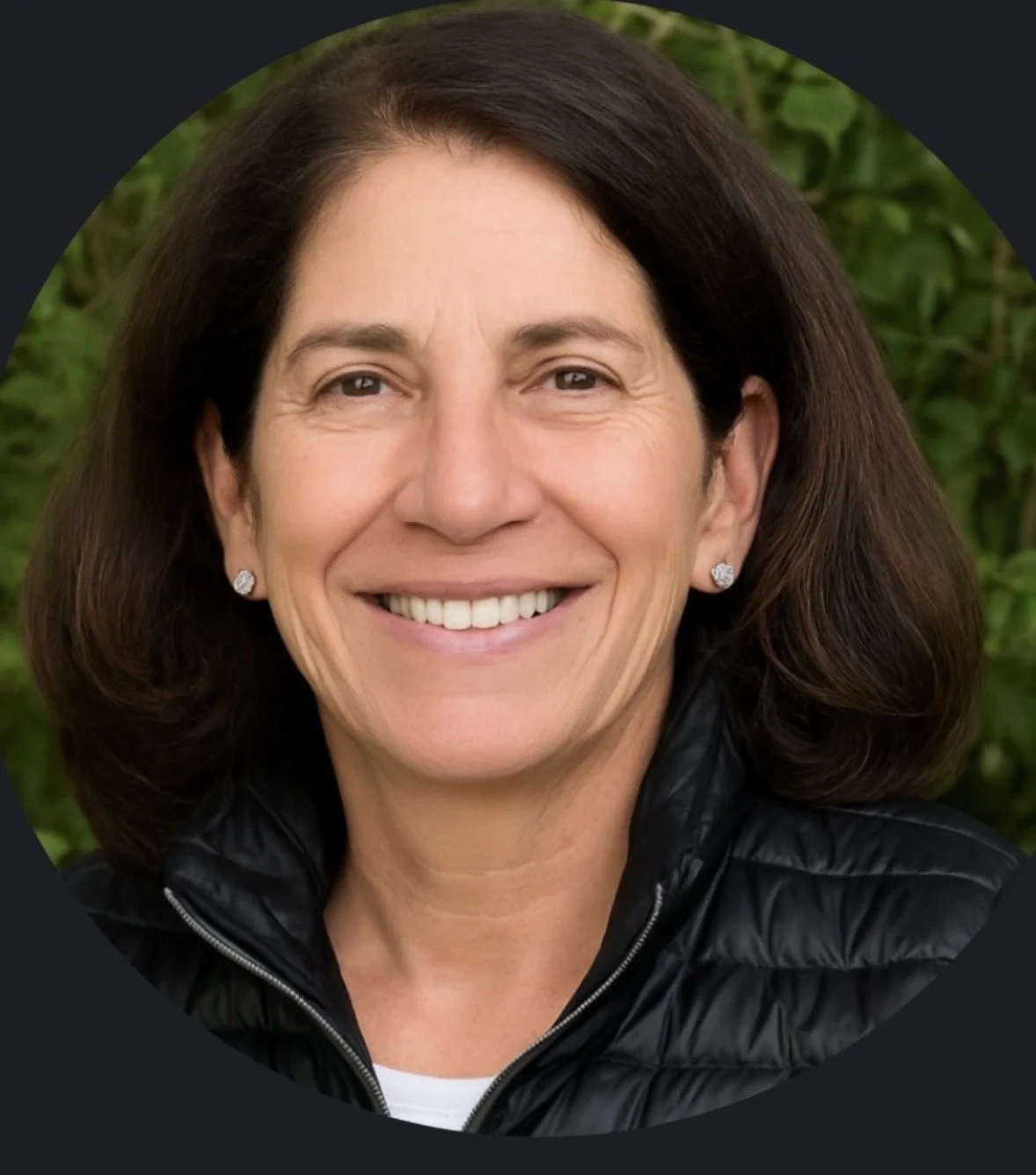
Each gathering is facilitated by Susan Coburn, who trained in Narrative Medicine at Columbia University. Sessions are small, intimate, and unhurried. No right answers. No required reading. No pressure to share. Just a room full of people willing to pay attention together and see what opens up.
There’s a seat for you. Come join us at the next StoryHeal gathering.
About Susan Coburn
There was a period in my life when I found myself without language for what I was living through. I knew something had shifted, in my body, in my sense of who I was, but I couldn't find the words. What helped, unexpectedly, was a poem. And then another. And then sitting in a room with other people who were also trying to find words, using literature as the way in.
That experience is what became StoryHeal.
I founded StoryHeal out of a conviction that literature and art offer something irreplaceable, a way into the interior life that feels safe, surprising, and deeply human. Not therapy. Not a writing class. Something quieter and more sideways than either of those, a guided experience of close reading, reflection, and, for those who want it, writing.
I hold an M.S. in Narrative Medicine from Columbia University, where I trained in the framework developed by Dr. Rita Charon. I also hold degrees from Harvard T.H. Chan School of Public Health and the University of Michigan. But the credential that matters most to me is having sat in enough rooms to know what opens people up, and what doesn't.
StoryHeal is based in the Vail Valley, Colorado.
The Margin at Vail Library -
Tuesday, June 23, 6:00 pm to 7:00 pm
The Margin is a StoryHeal program where we do our most honest thinking. The margin, that white space beside the page, is where we scribble a question, circle a word, write yes or why or this. Twice a month, we gather at the library to live in that space together. We might sit with a passage, a letter, a piece of art, a fragment of history. We slow down, notice what stands out, and see where the conversation goes. No preparation needed. Just come as you are.
Jack's Place at Shaw Cancer Center
Wednesday, June 24, 5:00 pm to 6:00 pm
A monthly gathering in collaboration with Vail Health for anyone touched by cancer on the third Wednesday of every month. Current and post treatment patients, caregivers, and community members welcome. Free and open to all.
BodyKind Vail
Thursday, June 25, 5:30 pm to 6:30 pm
A monthly StoryHeal series in collaboration with BodyKind Vail for those in eating disorder and/or body image treatment or recovery, using literature and art to explore identity, the body, and self-compassion.
Bookworm of Edwards
Tuesday, July 21, 5:30 pm to 7:00 pm
Ann Patchett has a gift for writing characters who are trying to figure out who they are and what they owe the people they love. Her newest novel, Whistler, is no exception. We’ll gather at Bookworm for an immersive evening centered on a passage from Whistler. We'll read it slowly together, notice what draws us in, and see where the conversation goes. There's a short writing invitation for those who want it. No preparation needed, no need to read the book ahead of time.
UPCOMING STORYHEAL PROGRAMS
What to Expect and Sample Session
A StoryHeal session is a small gathering. You don't need any experience with art or writing. You just need to show up.
Each session begins with a single image, like a text or a painting or a photograph, which is offered without explanation. You're invited to look at it slowly, to notice what draws your attention, what you feel.
From there, a question opens the conversation. Not a quiz. Not a prompt with a right answer. Something more like: What does this bring up for you?
People write. Sometimes just a few lines. Sometimes more. Then, for those who want to, there's an invitation to share, though sharing is always optional.
Sessions typically run 60 to 90 minutes. StoryHeal is not therapy, but many people find it therapeutic.
What people tend to say afterward: they feel heard. They notice something they hadn't named before. They leave a little lighter.
Sample Session
Theme: Returning to Yourself and Renewal
This session pairs David Hockney’s luminous The Arrival of Spring with Claude McKay’s poem After the Winter. Together, the two pieces trace the arc from endurance to renewal, and from the long quiet of winter into the full-bodied aliveness of spring. The session invites participants to locate themselves in the arc and to consider what it means to return to themselves after a difficult season.
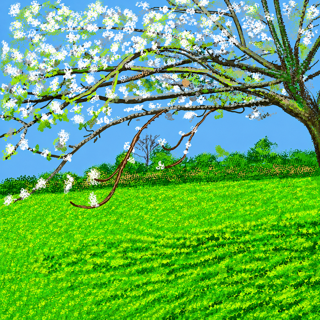
About this painting: The Arrival of Spring in Woldgate, East Yorkshire
David Hockney, 2011
David Hockney returned to the same country lane in Yorkshire for months; through cold, through rain, always waiting to witness the exact moment that spring arrived. While in his 70s, Hockney drew this work on an iPad, a tool he’d never used before. The result is electric: branches in full blossom sweeping over a field exploding into green, a world that has come back to life.
Take a moment to look. Then consider:
• What is the first thing you notice?
What season does this feel like in your own life right now?
If you could step into this painting, where would you go?
After the Winter
By Claude McKay
Some day, when trees have shed their leaves
And against the morning’s white
The shivering birds beneath the eaves
Have sheltered for the night,
We’ll turn our faces southward, love,
Toward the summer isle
Where bamboos spire the shafted grove
And wide-mouthed orchids smile.
And we will seek the quiet hill
Where towers the cotton tree,
And leaps the laughing crystal rill,
And works the droning bee.
And we will build a cottage there
Beside an open glade,
With black-ribbed blue-bells blowing near,
And ferns that never fade.
About this Poem:
Claude McKay’s poem moves through the patient endurance of cold and dark into the full, bodily release of spring. It is not sentimental; the poem takes the winter very seriously. But it also trusts but in return. The speaker knows warmth will come, and when it does, there is a quality of coming home to oneself. The poem’s language is lush and sensory, full of color and texture. It pairs naturally with Hockney because both works are about the same moment: the world coming back, and a self coming back with it.
Reflection:
Is there something you've held onto during a hard season?
What does it feel like to be fully present to something beautiful?
What have you been waiting to feel again?
Is there a season when you feel most like yourself?
Is there a line in the poem that stayed with you?
Combining the Artwork and the Poem
Claude McKay’s poem moves through the patient endurance of cold and dark into the full, bodily release of spring. It is not sentimental; the poem takes the winter very seriously. But it also trusts but in return. The speaker knows warmth will come, and when it does, there is a quality of coming home to oneself. The poem’s language is lush and sensory, full of color and texture. It pairs naturally with Hockney because both works are about the same moment: the world coming back, a self coming back with it.
Invitation to Write:
Begin with: What I am ready for is….
Hockney returned to the same road again and again, waiting for this moment. What have you been returning to?
Begin with: After my winter, I…...

In Their Own Words from StoryHeal Participants
“I left feeling more connected to myself and honestly more connected to other people too.”
“It reminded me how meaningful it can be to sit together and really listen.”
“I appreciated that you could participate however you wanted. There was no pressure.”
“It’s hard to explain, but something about the experience stayed with me.”
“I almost didn’t sign up because I thought it might feel too academic, but it was incredibly accessible and welcoming.”
“It felt meaningful without feeling heavy.”
Bring StoryHeal to your community
StoryHeal is available to partner with organizations, venues, and community groups across the Vail Valley and beyond. Whether you work in healthcare, recovery, education, wellness, or the arts — or simply have a space where people gather — StoryHeal can be shaped to fit your community and your needs.
Each program is thoughtfully designed around the people in the room. I work with you to find the right texts, the right tone, the right format for your setting.
I’d love to hear from you. Reach out to learn more or to start a conversation about bringing StoryHeal to your corner of the world.